How to Meal Plan on $100 a Week
In this article
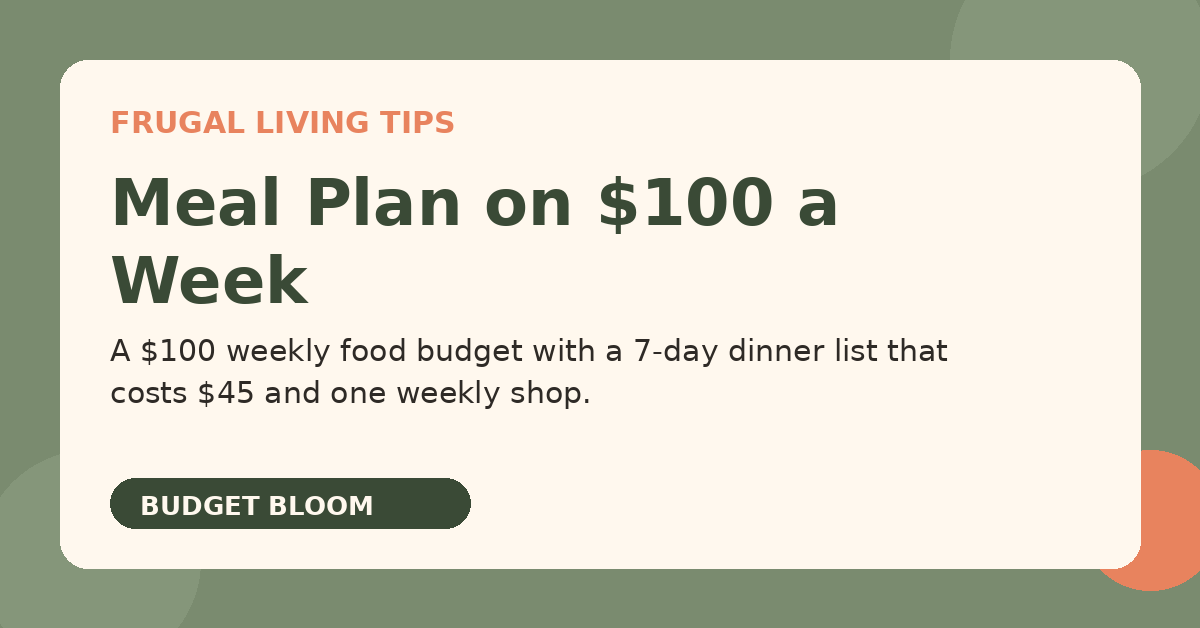
$100 a week for food sounds tight until you give every dollar a job. This plan feeds one person for a week — breakfast, lunch, dinner and snacks — on exactly $100, with a 7-day dinner list and a shopping list you can reuse. It is not about eating the same thing every day. It is about planning once, shopping once, and letting the plan do the deciding all week.
The $100 Weekly Budget
| Category | Amount |
|---|---|
| Breakfasts (7 days) | $16 |
| Lunches (7 days) | $24 |
| Dinners (7 days) | $45 |
| Snacks and drinks | $15 |
| Total | $100 |
Check: $16 + $24 + $45 + $15 = $100. Dinner is the biggest share because it is the meal you cook properly; breakfast and lunch stay cheap and repeatable on purpose.
7 Dinners for $45
Each dinner feeds one person with a leftover portion for tomorrow's lunch where noted. Prices are typical US grocery prices for store-brand ingredients.
| Day | Dinner | Cost |
|---|---|---|
| Monday | Pasta with tomato sauce and beans | $6 |
| Tuesday | Chicken tacos with rice and beans | $7 |
| Wednesday | Vegetable stir-fry with rice and egg | $6 |
| Thursday | Lentil soup with bread | $5 |
| Friday | Homemade pizza night | $8 |
| Saturday | Sheet-pan chicken and potatoes | $7 |
| Sunday | Slow-cooker beef and vegetable stew | $6 |
| Total | $45 |
Check: $6 + $7 + $6 + $5 + $8 + $7 + $6 = $45. Sunday's stew makes extra — that is Monday's lunch, already paid for.
Breakfasts and Lunches: Keep Them Boring
Breakfast is the same base all week: oats with banana, or eggs and toast. At about $2–3 a day, seven breakfasts land near $16 without any thought required.
Lunch is leftovers first: Tuesday's tacos become Wednesday's lunch, Sunday's stew becomes Monday's. On days without leftovers, a sandwich with fruit costs about $3–4. Seven lunches average about $3.40 a day, which is the $24 in the table. Boring lunches are the secret: they free the money for dinners you actually enjoy.
The Shopping List
Shop once, from this list, and skip the middle aisles:
- Proteins: chicken thighs, ground beef (small pack), eggs (dozen), lentils, canned beans
- Grains: pasta, rice, oats, bread, tortillas, pizza dough
- Produce: onions, potatoes, carrots, frozen mixed vegetables, bananas, tomatoes, lettuce
- Dairy and extras: cheese (small block), butter, tomato sauce, cooking oil, seasonings you already own
Buy store brand wherever you can — the savings across a full list are usually $8–12 a week, which is a whole extra dinner. And shop with the list in your hand: every unplanned item is a dollar taken from next week's plan.
5 Rules That Keep It at $100
- Plan before you shop. A 15-minute plan beats a $40 impulse shop every time.
- Cook double, eat twice. Every dinner that becomes tomorrow's lunch is a lunch you did not buy.
- Use what you have first. Check the pantry and freezer before writing the list — most kitchens already hold two or three meals.
- Frozen vegetables count. They are cheap, they do not spoil, and they make stir-fries and soups work all week.
- One treat, planned. Keep one planned treat in the $15 snacks budget — a bag of popcorn, a chocolate bar — so the plan feels livable instead of like a punishment.
What If You Cook for Two?
Double the dinners and lunches, keep breakfasts simple, and the plan lands near $170–180 a week for two — not a straight $200, because shared cooking wastes less and bulk packs cost less per portion. The same structure works: plan once, shop once, cook double.
FAQ
Is $100 a week realistic everywhere? Prices vary by city and store, so treat $100 as a target, not a law. If your first week lands at $110, look at the biggest category — usually dinners — and swap one $8 meal for a $5 soup night. The structure matters more than the exact total.
What about coffee? Home coffee costs pennies a cup and fits inside the $15 snacks-and-drinks budget. One coffee-shop drink a day is $25–35 a week on its own — that is a third of this whole plan, which is why it stays a planned treat, not a daily habit.
I hate cooking every night. Can this still work? Yes — cook three nights and eat leftovers the other four. Sunday stew, Tuesday tacos and Saturday chicken each make two meals. The plan already leans on leftovers; lean harder and the cooking nights drop to three.
Conclusion
$100 a week works when the plan comes before the shop: $16 breakfasts, $24 lunches, $45 of dinners, $15 of snacks — planned once, shopped once, cooked double where it counts. Start this Sunday: write the 7 dinners, shop from the list, and see how far the week stretches. Your next step: put the money you save to work with our 10 Easy Ways to Save $500 Fast or toward debt with the Snowball vs Avalanche comparison.
New here?
Start with the plan that matches your next money goal, and save the pin so you can find it again.
Follow Budget Bloom on Pinterest