15 Things to Stop Buying to Save $300 a Month
In this article
What if the fastest way to save $300 a month is not earning more, but simply buying less of the right things? Most budgets do not leak through one big mistake. They leak through dozens of small, forgettable purchases — a coffee here, a delivery fee there, a subscription nobody remembers signing up for. This list shows 15 things to stop buying to save $300 a month, with a realistic monthly estimate for each one. You do not need to quit all 15 forever. Quit them for one month, watch what happens, and keep the cuts that do not hurt.
The 15 Things to Stop Buying to Save $300 a Month
- Coffee shop coffee — about $40 a month. A $5 coffee four times a week is roughly $80; cutting to weekends only, or brewing at home on weekdays, realistically saves half of that. Keep the ritual, change the price.
- Buying lunch at work — about $50 a month. Two bought lunches a week at $12–13 adds up fast. Packing lunch on those days is the single biggest saver on this list for most people.
- Food delivery fees and markups — about $30 a month. The food costs more, then delivery fees, service fees, and tip stack on top. Picking up the same meal yourself removes most of the extra.
- Impulse online shopping — about $35 a month. The one-click order you forget about until it arrives. A 48-hour waiting rule kills most of these purchases without any willpower at all.
- Unused subscriptions and apps — about $25 a month. Check your card statement for anything you have not opened in 30 days. Cancel first; you can always resubscribe later, and most people never do.
- Impulse clothing buys — about $20 a month. The sale item bought because it was cheap, not because it was needed. A simple rule — nothing unplanned, nothing without a 7-day wait — ends most of it.
- Brand-name groceries — about $20 a month. Store brands for staples like rice, oats, pasta, and cleaning basics are often made to the same standard. Our guide to saving $200 a month on groceries shows where the biggest swaps are.
- Premium cable channels — about $18 a month. If most of your watching happens on one or two services, the big channel package is money for nothing. Drop to the smaller package for a month and see if you miss it.
- Convenience store snacks — about $15 a month. The $3–4 add-on at the gas station or checkout, several times a week. A snack kept in the car or desk drawer costs a fraction as much.
- Bottled water and single-serve drinks — about $12 a month. A refillable bottle and drinks bought in multi-packs at the grocery store replace most of these purchases.
- Lottery tickets — about $10 a month. Small, hopeful, and permanent. Redirecting the same $10 into savings is the only version of this purchase that reliably pays out.
- Paid car washes — about $8 a month. Two basic washes a month replaced with a bucket, a sponge, and twenty minutes at home.
- Impulse home decor and candles — about $7 a month. The small pretty thing that caught your eye in the store and blends into a shelf a week later. Photograph it instead; the wanting usually passes.
- Pre-cut and pre-packaged convenience foods — about $6 a month. Pre-cut fruit, shredded cheese, and single-serve packs charge a premium for minutes of work. Buying the whole version saves a little every single week.
- Daily soda or energy drinks — about $4 a month. Even cutting one small daily drink habit in half adds up over a month — and this is the item most people find easiest to restart saving on when money gets tight.
The $300 Math, Grouped
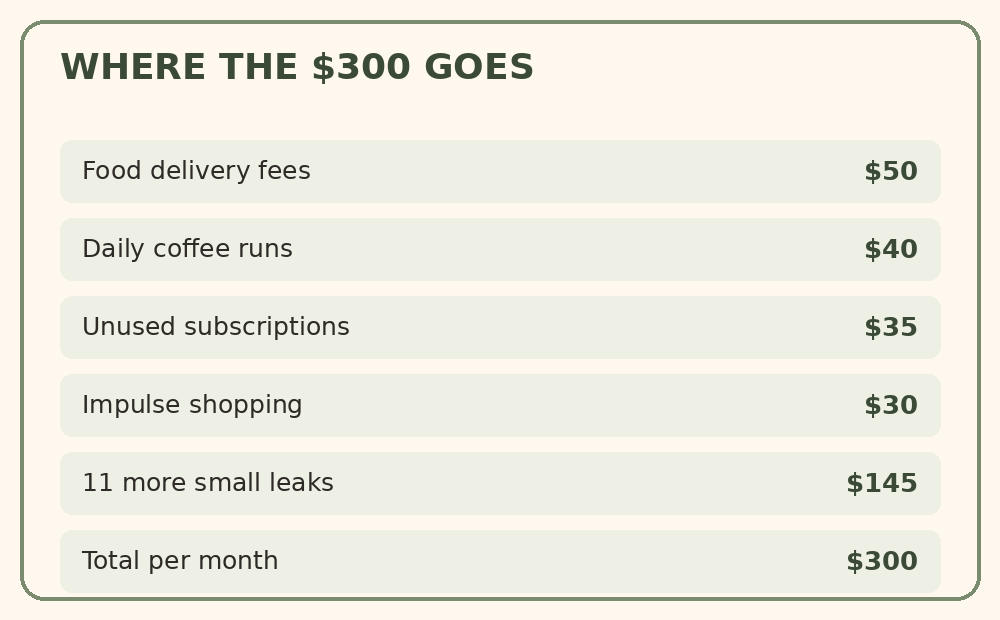
Here is how the 15 estimates group together:
| Group | Items | Monthly saving |
|---|---|---|
| Food and drink habits | 1, 2, 3, 9, 10, 14, 15 | $157 |
| Impulse shopping | 4, 6, 13 | $62 |
| Subscriptions and services | 5, 8, 12 | $51 |
| Grocery brand swaps | 7 | $20 |
| Lottery tickets | 11 | $10 |
| Total | 15 items | $300 |
An honest note: these are estimates based on typical prices and habits, and your individual savings will vary. Your coffee habit might be worth $15 or $90. Your total might land at $180 or $420. That is fine — the point of the list is to find your leaks, and even reaching half of $300 means $150 a month, $1,800 a year, that used to disappear without a trace.
What to Do With the $300
Savings that stay in your checking account quietly get spent again, so give this money a job on the day you would have spent it. Send it to a separate savings account and aim it at one goal: a starter emergency fund using our 4-week emergency fund plan, or turn it into a monthly habit with the Save $500 in 30 Days challenge. The purchase you skipped is forgotten in a week; the growing balance is not.
FAQ
Do I have to stop buying all 15 things forever? No. Try one full month first. Most people find about half the list painless and keep those cuts permanently, relax a few, and still save $150–200 a month without feeling restricted.
What if I do not buy most of these things already? Then your leaks live somewhere else — look at your last 30 days of card transactions and circle every purchase under $15 that was not planned. Your personal list of 15 is hiding in that statement.
Is it better to cut spending or earn more? For this month, cutting wins: it works immediately, needs no one's permission, and the full amount lands in your account. Earning more is a great second step, and the two together are how budgets change fast.
Summary
Small purchases are not small when they repeat every week. Coffee, lunches, delivery fees, forgotten subscriptions, and a dozen other quiet habits add up to about $300 a month for a typical household. Stop buying the 15 things on this list for one month, move what you save into a separate account the same week, and let the honest math — whatever your personal total is — convince you to keep going.
Recommended reading: 25 Ways to Save $200 a Month on Groceries
New here?
Start with the plan that matches your next money goal, and save the pin so you can find it again.
Follow Budget Bloom on Pinterest