How to Stop Impulse Buying — 7 Simple Tricks That Actually Work
In this article
- What Impulse Buying Really Costs
- Trick 1 — The 24-Hour Rule
- Trick 2 — Unsubscribe From Sale Emails
- Trick 3 — Never Shop Without a List
- Trick 4 — Delete Saved Cards and Shopping Apps
- Trick 5 — Use Cash for Extras
- Trick 6 — Shop With a Full Stomach and a Full Day
- Trick 7 — Ask "Where Will It Live?"
- FAQ
- Conclusion
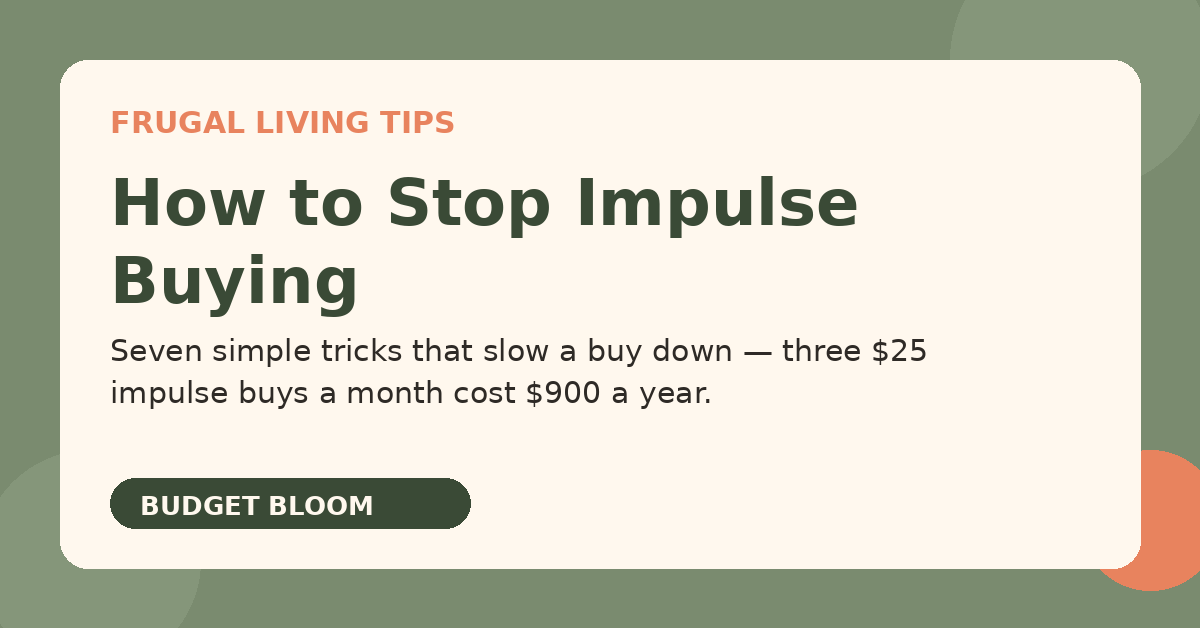
Impulse buying is not a character flaw — it is a design. Shops, apps, and sale emails are built to make you buy before you think. The fix is not more willpower; it is seven small tricks that slow the buy down long enough for your brain to catch up.
What Impulse Buying Really Costs
| Habit | Per month | Per year |
|---|---|---|
| 3 impulse buys at $25 each | $75 | $900 |
| 1 impulse buy a week at $25 | $100 | $1,200 |
| Daily $10 "small" buy | $300 | $3,600 |
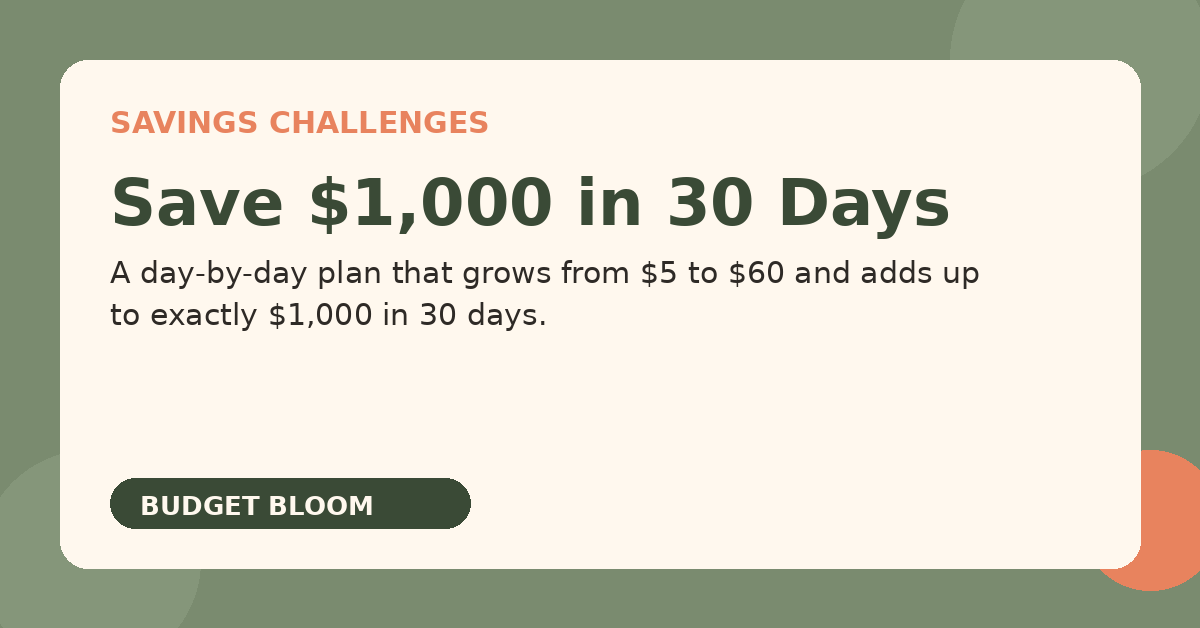
Check the maths: 3 x $25 = $75 a month, and $75 x 12 = $900 a year. That $900 is a full emergency fund, a debt payment, or the start of our Save $1,000 in 30 Days plan — spent on things you probably forgot a week later.
Trick 1 — The 24-Hour Rule
Want it? Wait 24 hours. Write it on a list, close the app, and come back tomorrow. Most wants fade overnight — and the ones that survive are usually real wants. This is the same rule from our Save $500 Fast plan, and it is the single most powerful trick on this list.
Trick 2 — Unsubscribe From Sale Emails
A sale email is a shop knocking on your door. Unsubscribe from every store that emails you deals — keep only the ones you actually shop from on purpose. Fewer temptations in your inbox means fewer impulse buys, with zero willpower needed.
Trick 3 — Never Shop Without a List
A list turns shopping into a mission: buy what is on it, leave. No list means every shelf is a suggestion. This works for groceries too — our 25 Ways to Save $200 on Groceries guide starts with planning the shop before you leave the house, and our Black Friday Budget: 6 Rules guide starts with a list and a limit set before you browse.
Trick 4 — Delete Saved Cards and Shopping Apps
Friction is your friend. Delete shopping apps from your phone and remove saved card details, so every purchase needs you to type the number in. That extra minute is often enough for the want to pass. Keep one app only if you genuinely use it weekly — the rest can wait in the browser.
Trick 5 — Use Cash for Extras
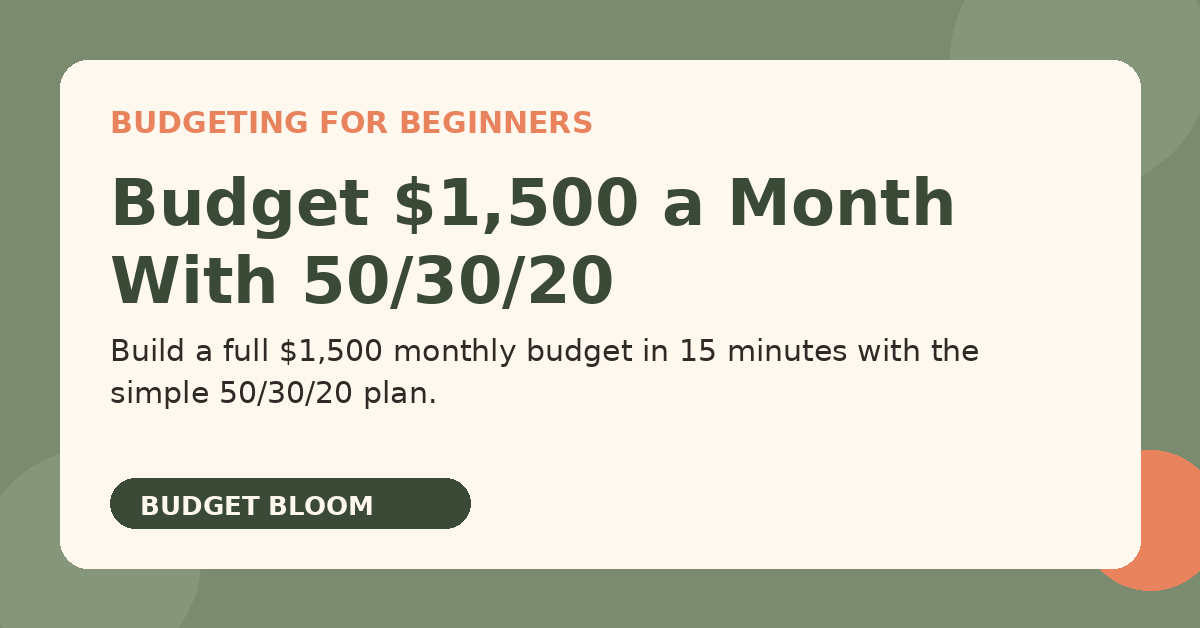
Give yourself a fixed cash amount for extras each week — say $30 — and leave the card at home for fun spending. When the cash is gone, the spending stops. Cash makes spending feel real in a way a tap never does, and it pairs well with the written plan in our Budget $1,500 a Month With 50/30/20 guide.
Trick 6 — Shop With a Full Stomach and a Full Day
Hungry, tired, bored, or upset is the worst time to shop — every one of those states makes "treat yourself" feel reasonable. Shop after a meal, never as a way to fix a bad mood. If the day was hard, take a walk first — free fun, as in our 7-Day No-Spend Challenge — and decide tomorrow.
Trick 7 — Ask "Where Will It Live?"
Before you buy, name the exact place it will live in your home. No shelf, no drawer, no hook? Then it is clutter, not a purchase. This one question kills more impulse buys than any budget line, because it makes the cost visible: not just $25, but $25 plus a home for it.
FAQ
What counts as an impulse buy? Anything you had no plan to buy before you saw it — in a shop, an app, or an email. Planned treats are not impulse buys; they are in the budget, and they are fine.
What if I already bought it? Return it if you can. If not, note the amount, forgive yourself, and move on — one buy does not break a budget, just like one bad month does not break a plan. Our 5 Budgeting Mistakes guide explains why quitting after one slip is the real mistake.
Does the 24-hour rule work for big purchases too? Use 30 days for anything over $100. A month of waiting turns most big wants into clear yes-or-no answers — and the money stays safe while you decide.
Conclusion
Seven tricks, one idea: slow the buy down. Wait 24 hours, unsubscribe from sale emails, shop with a list, delete the apps, use cash for extras, never shop hungry or upset, and ask where it will live. Three $25 impulse buys a month cost $900 a year — keep even half of that, and you have $450 towards your next goal.
New here?
Start with the plan that matches your next money goal, and save the pin so you can find it again.
Follow Budget Bloom on Pinterest